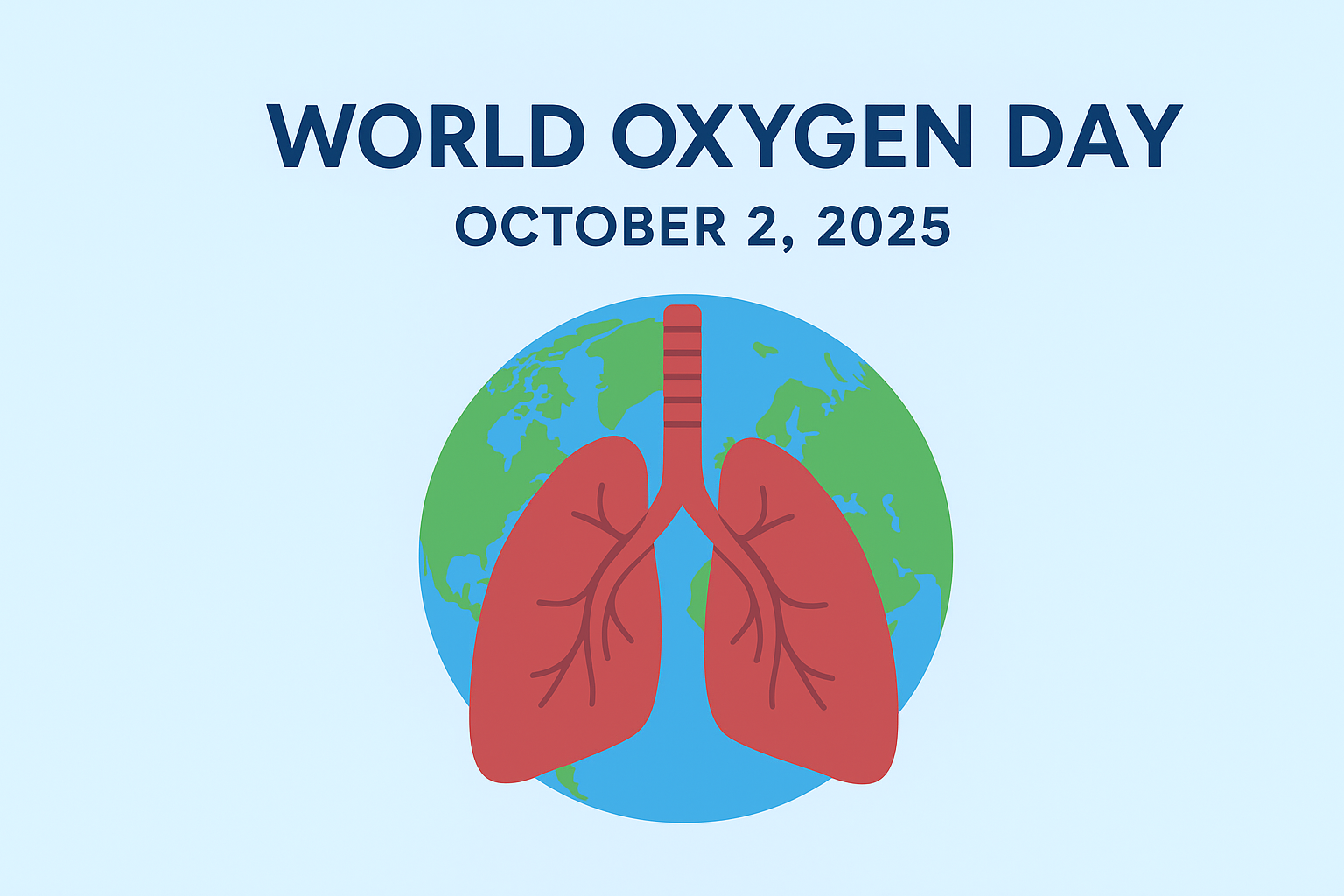
On October 2, people around the globe come together to recognize World Oxygen Day—a reminder of the essential role oxygen plays in sustaining life and health. While most of us breathe without giving it much thought, for millions living with chronic respiratory conditions such as COPD (Chronic Obstructive Pulmonary Disease), pulmonary fibrosis, or severe asthma, oxygen isn’t just part of life—it’s a lifeline.
At Breathe Strong America, we believe this day is an important opportunity to reflect on the history of oxygen therapy, celebrate the advancements in modern oxygen delivery, and highlight how portable oxygen concentrators (POCs) are helping people live longer, fuller, and more independent lives.
The Origins of Oxygen Therapy: From Discovery to Medical Use
The story of oxygen begins in the late 18th century. In 1774, Joseph Priestley, an English chemist, conducted experiments that led to the discovery of oxygen. Around the same time, Swedish chemist Carl Wilhelm Scheele also isolated the gas, though his work wasn’t published until later. Soon after, French scientist Antoine Lavoisier gave oxygen its name and explained its role in combustion and respiration.
It didn’t take long for scientists to wonder whether oxygen might have therapeutic benefits. By the early 19th century, physicians experimented with oxygen therapy to treat a range of conditions, though the scientific understanding of respiratory disease was still limited. In the 1880s, the first oxygen tents and masks were used in hospitals for patients in respiratory distress.
During the 20th century, the medical community began to truly recognize oxygen as a critical therapy. By the 1950s, supplemental oxygen was commonly prescribed for conditions like emphysema and chronic bronchitis. However, early oxygen delivery was far from convenient—patients were tethered to large, heavy tanks that limited their mobility and quality of life.
A Breakthrough in Care: Long-Term Oxygen Therapy
One of the biggest milestones in respiratory care came in the 1960s and 70s, when researchers discovered that long-term oxygen therapy (LTOT) could extend life for people with chronic lung disease. A landmark study called the Nocturnal Oxygen Therapy Trial (NOTT) in the 1980s confirmed that continuous oxygen use significantly improved survival in patients with severe COPD.
This was a turning point. For the first time, oxygen wasn’t just seen as a temporary aid in emergencies—it became a prescription for better quality of life and longevity. Patients could live longer and more comfortably if they had steady access to oxygen at home.
But even then, mobility remained a major challenge. The earliest systems relied on compressed oxygen cylinders or liquid oxygen tanks, both of which were heavy, bulky, and required regular refills. For many, this meant staying close to home and planning life around their oxygen deliveries.
The Portable Oxygen Revolution
The next great advancement was the invention of the oxygen concentrator. Unlike tanks that stored oxygen, concentrators worked by pulling in room air, filtering out nitrogen, and delivering a steady flow of nearly pure oxygen. This eliminated the need for refills and made oxygen delivery more sustainable.
The first oxygen concentrators appeared in the 1970s for home use. But the real breakthrough came decades later with the development of portable oxygen concentrators (POCs). These lightweight, battery-powered devices allowed patients to leave home and carry their oxygen with them wherever they went.
Portable oxygen concentrators transformed respiratory care in three profound ways:
- Mobility and Independence – Patients could go shopping, attend family events, travel by plane, and participate in daily activities that were once restricted.
- Safety and Convenience – Unlike heavy tanks, POCs don’t run out of oxygen unexpectedly; as long as they’re charged, they provide a reliable supply.
- Peace of Mind – With oxygen available at the push of a button, patients and families gained confidence in managing respiratory conditions at home and on the go.
Today, POCs are widely available in a variety of models, some weighing less than five pounds. They can operate on continuous or pulse flow settings, depending on a patient’s prescription, and many are approved for air travel by the FAA.
The Human Impact: Stories of Lives Transformed

Behind every piece of medical technology is a story of human resilience. Portable oxygen concentrators have changed what it means to live with a chronic lung condition.
- A grandmother with COPD can now attend her granddaughter’s wedding without worrying about running out of oxygen.
- A veteran with pulmonary fibrosis can travel cross-country to see old friends, carrying a POC in a backpack instead of hauling tanks.
- An active retiree who once gave up golfing can now return to the course, confident that oxygen is always within reach.
These aren’t just conveniences—they are lifelines to independence, dignity, and joy.
The Role of Awareness: Why World Oxygen Day Matters
World Oxygen Day serves as a global reminder that oxygen is not just a chemical element—it is the difference between limitation and possibility for millions of people. Unfortunately, awareness of oxygen therapy lags behind other health conversations. Many people still believe oxygen use is a sign of giving up, when in fact it’s a tool that helps patients live longer, healthier, and more active lives.
By shining a spotlight on oxygen therapy, World Oxygen Day helps:
- Educate the public about the importance of early diagnosis and treatment for respiratory diseases.
- Reduce stigma associated with using oxygen in public.
- Encourage innovation in oxygen delivery technology.
- Promote advocacy for patients who struggle with access to affordable oxygen equipment.
At Breathe Strong America, we are committed to using this day to raise awareness, share resources, and empower patients and families.
Looking Ahead: The Future of Oxygen Therapy

While portable oxygen concentrators have already transformed care, innovation continues. Researchers and engineers are working on devices that are:
- Smaller and lighter, making them even easier to carry.
- Smarter, with sensors that automatically adjust oxygen flow based on activity and blood oxygen levels.
- More connected, integrating with mobile apps and telehealth platforms so healthcare providers can monitor patients remotely.
- Environmentally sustainable, reducing waste from disposable tanks and batteries.
As technology evolves, the future of oxygen therapy is one where patients can live even more freely, without the constant reminder of medical equipment.
How You Can Support World Oxygen Day
There are many ways individuals, families, and communities can honor World Oxygen Day:
- Learn and Share – Educate yourself about the signs of COPD and other respiratory conditions. Share resources with friends and loved ones.
- Support a Loved One – If you know someone using oxygen therapy, offer encouragement and help reduce the stigma around visible medical equipment.
- Advocate – Join organizations like Breathe Strong America in advocating for better insurance coverage and access to oxygen equipment.
- Take Care of Your Lungs – Preventive steps like avoiding smoking, monitoring air quality, and exercising can help maintain lung health.
Conclusion: Breathing Strong, Living Fully
On World Oxygen Day, we pause to honor the power of oxygen—a resource most of us take for granted, but one that millions depend on every single day. From the first discovery of oxygen in the 18th century to the modern era of portable oxygen concentrators, the journey of oxygen therapy reflects the resilience of science, medicine, and the human spirit.
For those living with chronic respiratory conditions, oxygen therapy is not just about survival—it’s about living with freedom, dignity, and hope. Portable oxygen concentrators, in particular, have redefined what is possible, allowing patients to travel, socialize, and enjoy the moments that make life meaningful.
It’s also important to remember that even if you are diagnosed with something for which there is no cure, it doesn’t mean that nothing can be done to slow disease progression and improve quality of life. Nothing could be further from the truth. At Breathe Strong America it is our mission to empower you with information to help you better manage symptoms and instill confidence in you that you will be able to recognize problems developing and know what to do.
At Breathe Strong America, we stand with every patient, caregiver, and family navigating life with oxygen therapy. This World Oxygen Day, we celebrate progress, push for greater awareness, and reaffirm our mission: helping every individual breathe strong and live fully.